
Chicken coop under $100
I’ve raised laying hens for decades on our small farm here in the U.S., and I know what it feels like to look at prices and think, “Well, the chickens will be living better than I do.” You don’t need a fancy coop to keep birds safe and productive. You just need something solid, dry, and smartly planned.
Below I’ll walk you through what really matters when you’re choosing a chicken coop under $100, with simple, down‑to‑earth tips, a few hard‑earned mistakes, and some ready‑made options you can check out if you don’t feel like swinging a hammer tonight.
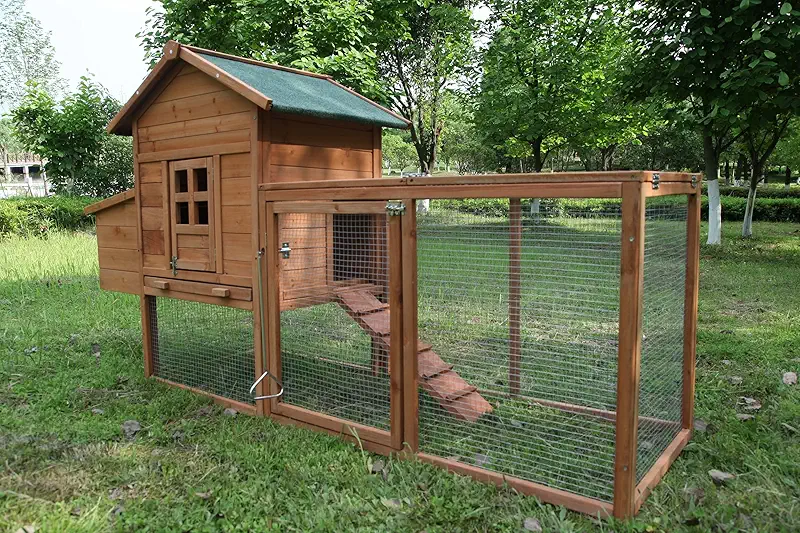
A compact coop can still be safe, dry, and easy to live with for both you and your hens.
What truly matters in a cheap coop
When folks ask me about a low‑cost chicken coop, I always start with this: your hens care a whole lot more about dry bedding and fresh air than about cute paint and little windows. I’ve had ugly plywood boxes that kept hens healthier than some pretty coops I see online.
A chicken coop under $100 can work just fine if you focus your money and effort on the right things. If a feature doesn’t keep them dry, safe, or comfortable, it’s probably just decoration. Your hens won’t leave a review about your color choices; they’ll just either lay eggs… or quit.
Think of the coop as three layers of protection:
- Roof and walls keep out rain, wind, and snow.
- Wire and latches keep out raccoons, dogs, and the rest of the night shift.
- Good layout keeps you from cussing every morning while you clean and collect eggs.
If you get those three right, the price tag matters a lot less than you’d think.
- Enough space: about 3–4 sq ft per hen inside.
- Dry floor with decent bedding depth.
- Wire small enough that a raccoon hand can’t reach in.
- Strong latch you can work with cold fingers.
- Ventilation high up, not at bird level.
- Roosts higher than the nest boxes.
- Simple access door for you and your bucket.
If a coop under $100 checks most of those boxes, it’s worth a serious look, even if it isn’t Instagram‑pretty.
Let me see optionsMy first “cheap coop” (and what went wrong)
Many years back, when money was tighter than a brand‑new feed sack, I decided I’d “save a fortune” and build my own bargain coop. I dragged home some old pallets, a half‑used roll of wire, and a rusty door I found behind the barn. I told my wife, “Don’t worry, the hens will love it.” She just raised an eyebrow.
The good news: the whole project cost me a little under a hundred dollars, counting screws and a cheap tarp. The bad news: the first storm came through and blew half the roof off. The hens looked at me like I’d rented them the worst motel in the county.
What went wrong? I had tried to save money on the structure and the roof—the very parts that should never be flimsy. The wire was thin, the posts were wobbly, and the roof was more of a suggestion than a promise. I learned quick: going cheap is fine, but you can’t skimp on what holds the thing together.
Ever since then, every time I look at a chicken coop under $100, I ask myself:
- “If the wind rocks this all night, will it still be standing?”
- “If a raccoon leans on this door, who’s going to win?”
- “If it rains sideways, will the birds still be dry?”
If I can’t answer “yes” to those, I move on, no matter how good the price looks.
How many hens can live in a coop under $100?
This is where folks get themselves in trouble. They see a small, cute coop at a nice price and think, “Oh, I can squeeze six hens in there.” Let me tell you, crowded hens are noisy, grumpy hens. And grumpy hens do more feather‑pulling than egg‑laying.
Inside the coop, I like to see around 3–4 square feet per hen. More is always better. Outside in the run, I’m happiest with about 8–10 square feet per hen, though free‑ranging changes the math a bit.
Many compact coops in the chicken coop under $100 range are realistically good for:
- 2–3 hens with a small built‑in run, or
- 3–4 hens if they get to free‑range most days.
If a listing says “good for 6–8 hens” and the footprint looks like a doghouse in the picture, they’re using wishful thinking, not farm math. I always figure out the floor size with my own eyes, not the marketing claims.
Remember, a slightly bigger coop for fewer birds is never a mistake. Buying tiny and stuffing it full? That’s where the pecking starts and the eggs stop.
Ventilation, predators, and other “unseen” details
The things you don’t see at first glance are the ones that will sneak up on you: bad air, sneaky predators, and a layout that makes cleaning a chore you dread. A chicken coop under $100 can still be smartly designed if you look close.
Fresh air without drafts
Chickens breathe out a lot of moisture. Pile that up inside a tight little coop and you get damp bedding, ammonia smell, and frostbite on combs in winter. You want ventilation high up, under the eaves or at the top of the walls, so the warm, moist air can drift out without blasting the birds with cold wind.
When I study a low‑priced coop, I look for:
- Openings or vents near the roof line.
- Wire‑covered windows you can leave open in summer.
- Some way to close things down a bit in a hard winter.
Predator‑proofing on a budget
I always say, “The countryside has two shifts: the day crew and the night crew.” The day crew is hawks and dogs. The night crew is raccoons, opossums, foxes, coyotes, and anything else that thinks chicken tastes like victory.
For a chicken coop under $100, you probably won’t get heavy‑duty everything, but you still need:
- Decent wire: I prefer ½" hardware cloth, but at minimum, avoid big, floppy fencing a raccoon can reach through.
- Solid latches: I like latches that need at least two motions to open. Raccoons are clever little bandits.
- Some ground protection: Either a wire skirt laying out around the run or buried sides to slow down diggers.
I’ve had raccoons test my setup many nights. They’re like free inspectors you didn’t ask for. If they can’t break in after a few tries, you’re doing alright.
Nesting boxes, roosts, and easy egg gathering
Hens are simple: give them a cozy place to sleep, a darker spot to lay, and they’ll usually hold up their end of the deal. With budget coops, these parts are often an afterthought, so look close.
Nesting boxes that stay clean
For every 3–4 hens, I like at least one nesting box. A chicken coop under $100 might only have one or two, and that can be fine for a small flock. What matters more is:
- They sit a bit lower than the roosts, so hens don’t sleep in them.
- They’re easy for you to reach without crawling on your knees.
- They’re not right under the roost, so droppings don’t fall into them all night.
I’ve had coops where gathering eggs meant bending like a contortionist. Trust me, that novelty wears off quick.
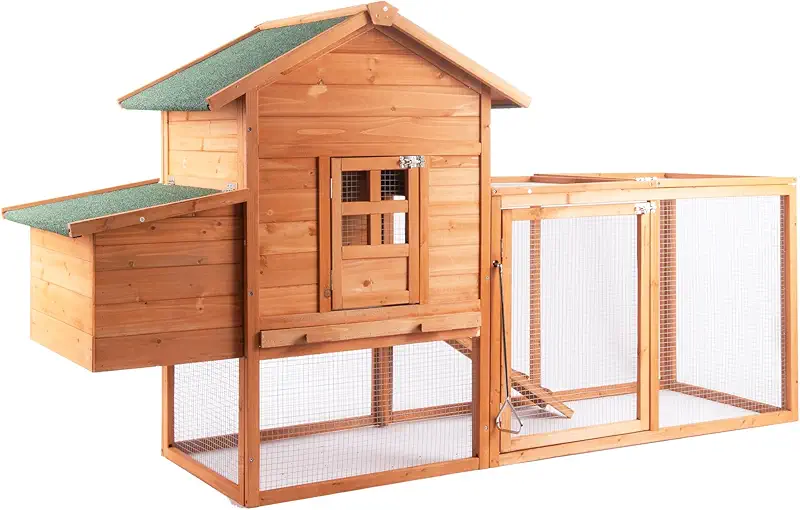
Roosts that feel natural
Chickens like to sleep up off the ground. A simple 2x2 or rounded perch works fine. I like the roosts higher than the nesting boxes so hens don’t decide to sleep where they should be laying. Less mess, less broken eggs.
Ideally, I want:
- At least 8–10 inches of roost space per hen.
- A surface wide enough that they can cover their toes in winter.
- Roosts placed so droppings fall on a part of the floor that’s easy to clean.
A cheap coop can still have good roosts. If it doesn’t, it’s usually something you can tweak with a board and a few screws.
Ready‑made coops under $100 vs DIY builds
I’ve built plenty of coops and I’ve also put together my share of boxed‑up kits that arrived on the porch. Both routes can get you to the same goal: a safe place for your hens and simple chores for you.
When a ready‑made coop makes sense
If you’re short on tools, time, or patience, a small chicken coop under $100 that comes pre‑cut and boxed can be a blessing. Most of them go together with a screwdriver and a little muttering under your breath. I’ve had neighbors who just wanted a starter flock of two or three hens, and these kits fit their life just fine.

Just keep your eyes open for:
- Very thin wood that might not like strong wind or heavy snow.
- Tiny runs that only work if birds free‑range a lot.
- Ladders and doors that look cute but are awkward to clean around.
When DIY stretches your dollar further
If you’ve got a stack of old lumber, a few tools, and maybe a teenager who owes you a favor, you can often build something sturdier than the average kit for under a hundred dollars. I’ve built solid coops almost entirely from recycled materials and a new roll of decent wire.
With DIY, the danger is going too cheap: using flimsy tarps instead of a real roof, or random wire that rusts out in a season. I’d rather spend half the budget on proper wire and decent fasteners, and then get creative with the framing.
Either way—ready‑made kit or DIY—remember the hens don’t care what the manual said. They care if it’s safe, dry, and not crowded.
Keeping hens healthy in a budget coop
The coop is just the shell. What you do day to day is what keeps your hens laying and singing that little morning song I never get tired of hearing. A chicken coop under $100 can hold very healthy birds if you follow a few simple habits.
Clean enough, often enough
I don’t spend my life shoveling coops, and you shouldn’t either. But I do keep up with it. In a small coop, things build up fast. I like to:
- Stir or rake the bedding a couple times a week.
- Add fresh shavings or straw when it starts to look beaten down.
- Do a deeper clean every month or so, more in wet weather.

I tell folks: if you wouldn’t want to sit in there with a sandwich for ten minutes, it’s time to freshen things up.
Feed, water, and boredom busters
Clean water is non‑negotiable. A small coop means buckets and waterers get dirty quicker. I check water at least morning and evening. I like to hang the feeder a little off the ground so they don’t scratch bedding into it.
Bored hens cause trouble. A chicken coop under $100 is often on the small side, so I like to give them:
- Scraps of vegetables, hung up so they have to peck at them.
- A handful of scratch grains tossed in the run so they can hunt for it.
- Stumps or small perches to hop onto outdoors.
Give hens something to do and they stop doing the things you don’t want, like pecking each other’s tails.
Seasonal tips for a chicken coop under $100
Weather will test your coop more than anything. Around here, we get hot summers and winters that bite a bit. I’ve seen budget coops survive both, with a little planning and a few cheap tweaks.
Summer: beating heat and stink
In summer, the goals are shade, airflow, and keeping water from turning into chicken soup. For small coops:
- Set the coop where it gets afternoon shade, if you can.
- Prop windows and vents open, with wire secure.
- Place waterers out of direct sun, even if it means moving them a couple of times a day.
I’ve also slapped a piece of light‑colored metal roofing or a cheap shade cloth over a dark roof. Makes a bigger difference than you’d think.

Winter: dry beats warm
In winter, folks sometimes wrap their small coops in plastic until it looks like a greenhouse. Then they write me asking why their birds are getting frostbite. The answer is trapped moisture. Even in the cold, you still need some airflow up high.
For a chicken coop under $100 in winter, I focus on:
- Blocking direct wind at bird level with boards or tarps.
- Leaving vents near the roof open so air can move out.
- Keeping bedding drier than you think you need; add fresh often.
Chickens handle cold better than damp. I’ve seen hens walk around on snow without complaining, but they hate damp drafts.
Small flock, small coop, steady eggs
Not everyone wants a big flock. Some folks just want a few eggs for breakfast and a handful of feathered friends to talk to while the coffee brews. For that, a modest chicken coop under $100 can be just the ticket.

When I help new keepers get started, I usually suggest:
- Start with 3–4 hens, not a dozen.
- Pick hardy, friendly breeds like Rhode Island Reds, Australorps, or good old barnyard mixes.
- Choose a coop that looks slightly too big for the number of birds you’re planning.
Then, keep notes. Watch how the hens act, how easy chores feel, and what annoys you about the coop. That way, if you upgrade later, you’ll know exactly what you want and what you don’t.
And don’t be surprised when you start saying things like, “Well, maybe just two more hens won’t hurt.” We’ve all been there. Chickens are a bit like potato chips.
FAQ about choosing a chicken coop under $100
Taking the next step with your coop
When you’ve walked around the yard a few times, thought about where the coop will sit, and pictured yourself carrying a feed bucket out there in January, you’re already doing more thinking than half the people who start with chickens. That alone will save you money and headaches.

A chicken coop under $100 isn’t about cutting corners; it’s about putting your dollars where they count: dry birds, safe nights, and easy chores. If a coop lets you step out in the morning, open the door, and see a bunch of calm hens and a nest of warm eggs, it’s doing its job.
I’ve had fancy coops and ugly patched‑up sheds, and the hens laid in both. What made the difference was how comfortable they were and how likely I was to keep up with chores. So choose something you won’t hate working with on a cold, wet morning. Your future self will thank you.

If you’re ready to look over different shapes, sizes, and layouts, and let your eyes and common sense pick what fits your yard and your hens, take a quiet minute and browse through the options. Think about where it will sit, how you’ll open it in the rain, and how your birds will live in it day after day.
I’ll browse coops now