
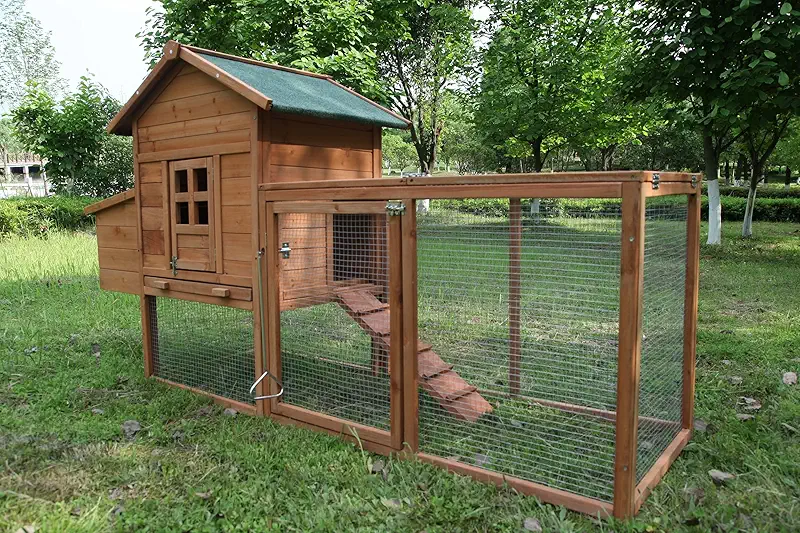
What I Look For In Any Wayfair Chicken Coop
When folks ask me what I think about a Wayfair chicken coop, I don’t start with fancy colors or cute windows. I start with the same four questions I asked the first coop I ever built out of old barn boards:
- Will my hens be safe in here, day and night?
- Will they stay dry, draft-free, and comfortable?
- Can I clean this thing without cussing up a storm?
- Will it still be standing strong after a couple winters?
If a coop checks those boxes, I don’t care whether it came from Wayfair, my neighbor’s barn, or a kit delivered in three boxes. Safety, comfort, and simple chores are what keep eggs coming and frustration low.
Size: The First Mistake Most New Chicken Keepers Make
Every spring I see the same thing: someone buys a tiny “cute” coop, brings home six hens, and by fall the birds are packed in there like rush-hour traffic. That’s when pecking starts, eggs drop, and tempers rise on both sides of the roost.
With a typical Wayfair chicken coop, sellers love to advertise big numbers for how many chickens it “fits.” I ignore that completely and use my own rule of thumb:
Space inside the coop
- 4 square feet per hen for standard breeds (like Rhode Island Reds, Plymouth Rocks)
- 3 square feet per hen for smaller breeds and bantams
- More space if your winters are long and birds stay inside often
Space in the run
- 8–10 square feet per hen minimum
- Plan for extra if you can’t free-range them much
- Think of the run like a living room, not a jail cell
When you look at a Wayfair chicken coop, take out pen and paper, measure the actual floor inside the coop (not counting the nest boxes), and do the math yourself. If the listing says “up to 8 chickens” and your math says comfortable for 4, trust the math. The birds will thank you in eggs and good behavior.
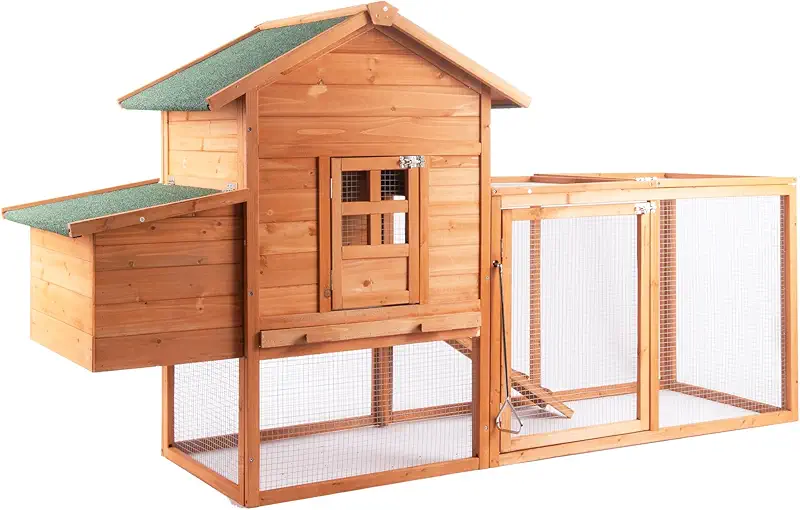
Roof, Wood, And Weather: Will Your Coop Survive A Real Storm?
I’ve had roofs blow off in prairie winds and doors freeze shut in January. So when I size up any Wayfair chicken coop, I look at weather like it’s an extra flock member that needs managing.
Roof style
A good coop roof sheds water and snow and doesn’t invite leaks. Here’s what I like to see:
- A solid pitch so rain and snow slide off, not sit and soak
- Roof panels that overlap well, especially on metal designs
- Shingles or metal that don’t feel like flimsy tin can lids
A flat roof might look tidy in the picture, but where I live, that’s just a birdbath for your whole coop.
Wood and frame
Many Wayfair chicken coop kits use soft woods. That’s not a problem if:
- The frame feels sturdy when you shake it
- You seal or paint the wood before it weathers
- The legs are protected from constant moisture and mud
I always tell new keepers this: “Buy the kit, but build the coop.” By that I mean, don’t be shy about adding a few of your own screws, extra bracing, or a bit of weatherproofing. A couple hours with a drill and some sealant can add years to a light wood coop.

Ventilation: The Part No One Shows In Pretty Pictures
This might surprise you, but in winter, chickens are more at risk from moisture than from cold. I learned that the hard way my first year, when I sealed up my coop too tight trying to keep my girls warm. Woke up to frost on their combs and a smell that could’ve knocked a raccoon over.
When you check a Wayfair chicken coop, look for:
- Vent openings high up under the eaves, above roost height
- Windows or vents that can be closed partway in storms but not fully sealed
- Real wire mesh over vents, not just cute decoration
Nest Boxes And Roosts: Where Eggs And Sleep Happen
Chickens don’t ask for much: a cozy place to lay, a safe place to sleep, and a little dignity while they’re doing both. A good Wayfair chicken coop design can handle that, but you have to check the details.
Good nest box setup
For layers, I like:
- 1 nest box for every 3–4 hens (they’ll share)
- Nests big enough so a hen can turn around comfortably
- Front lip high enough to keep shavings and eggs from rolling out
- Side access panel you can open from the outside
Some Wayfair chicken coop models have lovely lift-up nest box lids. That’s a back-saver when you’re gathering eggs in the rain with a coffee in one hand.

Roosts done right
Chickens sleep up on roosts, not on the floor, if you give them decent ones. Look for:
- Rounded edges or 2x4 boards turned wide-side up
- At least 8–10 inches of roost space per hen
- Roosts higher than the nest box entrances
- Enough space between roosts so hens aren’t pooping on each other’s backs
If the roosts in a kit seem flimsy, don’t overthink it. Swap them with a couple solid boards from the hardware store. I’ve done that on more than one “pretty” coop that showed up with roosts skinnier than a broom handle.
Predator Protection: Because Everything Loves Chicken
Where I live, the menu of things that want to eat chickens is longer than the breakfast section at a diner: raccoons, foxes, hawks, coyotes, neighborhood dogs, and one very patient weasel I politely relocated last year. So I take predator-proofing seriously.
Many Wayfair chicken coop kits include basic wire, but here’s the catch: a lot of that wire is chicken wire, and chicken wire is really only good at keeping chickens in, not keeping hungry critters out.
When you’re evaluating a coop:
- Prefer ½-inch hardware cloth for runs, vents, and windows
- Check that latches can’t be flipped open easily by raccoons (they’re little burglars with fur)
- Make sure doors close square and tight, no big gaps
- Plan to add a wire apron on the ground to stop diggers

Most of the time, I tell folks: assume you’ll spend a little time upgrading the wire and latches on any off-the-shelf coop. It’s cheaper than replacing hens, and it lets you sleep through the night without jumping up at every rustle outside.
Cleaning, Smell, And Your Future Back
A coop that’s hard to clean is a coop that’ll get ignored when life gets busy. I’ve been there: long day, tired legs, you tell yourself, “I’ll scrape the droppings board tomorrow.” Tomorrow turns into Saturday, and pretty soon that coop smells like a truck stop restroom.
When I look at a Wayfair chicken coop for day-to-day living, I want:
- A big door so I can step inside or at least reach every corner
- Removable trays or easy-access floors under the roosts
- Enough headroom that I’m not crawling like a mole
- Simple shapes inside—not a maze of tiny cubbies
Add some dry bedding, good ventilation, and a weekly “five-minute tidy,” and your coop won’t knock you over when you open the door.

My Simple Daily And Weekly Routine For Laying Hens
A good Wayfair chicken coop makes this routine easier, but the rhythm is the same no matter what you use. Here’s what I actually do with my laying flock.
Every morning
- Open coop door and let hens into the run or yard
- Check waterers—fresh, unfrozen, and not full of shavings
- Fill feeders and make sure everyone looks bright-eyed and busy
Every evening
- Count hens on the roosts (it’s easier than counting eggs for health checks)
- Close and latch doors tight (I double-check latches by habit)
- Quick glance at bedding: if it’s damp, I add a scoop of dry shavings
Once a week
- Scrape droppings boards or trays under the roosts
- Top up bedding in coop and nest boxes
- Rake out the run if it’s muddy and toss in some dry material

When your coop is laid out well—with decent doors, removable trays, and smart roost placement—this whole routine takes minutes, not an hour. That’s the real difference between a coop that makes chicken keeping a joy and one that turns into a chore.
Choosing A Wayfair Chicken Coop For Different Flock Sizes
Let me give you a few plain examples to help you picture your own setup. These are just guidelines, but they’re based on birds I’ve actually kept, not marketing guesses.
Small backyard flock: 3–4 hens
For a tiny starter flock, a compact Wayfair chicken coop with an attached run can work well if:
- The coop floor is at least 12–16 square feet
- The run gives those hens 32–40 square feet or more
- You can reach every corner without becoming a contortionist
This size is great if you mainly want eggs for your own breakfasts and the fun of listening to gentle clucking while you weed the garden.
Medium flock: 6–8 hens
For this size, I pay special attention to run space. A mid-size Wayfair chicken coop can be a good “coop core,” but I often plan on building a larger attached run with some basic lumber and wire. Your hens will use that space every single day.
Larger backyard flock: 10+ hens
At this point, you’re entering “mini-farm” territory. Some prefab coops will say they’re for 10–12 hens, but in my experience, that’s optimistic unless you’re in a very warm climate and free-range heavily.
For bigger flocks, I usually tell folks to think of a Wayfair chicken coop kit as part of the solution—maybe the main sleeping area— and then plan a more generous run and maybe an extra shelter space.
